An American in Istanbul: Click to hear the Yeni Makam Series of composer Edward J. Hines
WHAT ARE MAKAMS? Part 2.
Edward J Hines' Theory Joining Turkish, Arabic and Western Modes
 The classical music traditions of Turkish, Arabic and Western music are all based on the same musical theories of scale building credited to the ancient Greek Pythagoras.Over the centuries the three traditions followed a separate path of development, each of which is now recognized as a form of high art, but each with a distinct musical 'dialect.'
By the time of J.S. Bach, Western classical music had developed into a system of tuning known as equal temperament, where the musical octave is divided into 12 equally spaced half-tones. These tones are easily visible on any piano or fretted guitar. Equal temperament enables Western composers to create works using complex harmonies and polyphony.
Arabic classical music went through an important period of early development during the 9th through the 12th centuries when the Arabs ruled large parts of the Middle East, North Africa and southern Europe. Arabic scholars made significant contributions in studying and interpreting the works of the ancient Greeks; the Arabic system of modes known as maqamat came out of these early studies. In Arabic maqamat, the octave is divided into 24 equally spaced quarter-tones. Classical Arabic composers show skill in the development of these quarter-tones not through harmony or polyphony (as in the West), but through melody. To Western ears trained in 12 tone equal temperament, these quarter-tones can sound odd at first and are sometimes referred to as micro-tones.
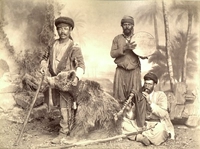 While Turkish classical music went through a parallel period of early development with the Arabs, the high point in the development of the Turkish classical style is during the Ottoman Empire period from the 15th through the 20th centuries. In Turkish makams, the octave is not divided equally, but proportionally using whole-tones, half-tones, quarter-tones and even smaller tones. In theory, there are 24 tones in the Turkish octave, however in practice there are probably 31 and perhaps more. Like Arabic composers, Turkish classical composers show skill in the melodic development of makams through melody. Turkish makams closely reflect Pythagorean thinking in the use of proportional tuning. The eighth-tone is equal to 1 Pythagorean Comma (approximately 23 cents), which plays a crucial role in micro-tonal pitch development within any mode. The Yeni Makam Series of composer Edward J. Hines is a series of chamber works which synthesize Western compositional technique with the ancient theory of both Turkish makams and Arabic maqamat. To accomplish this objective, in Yeni Makam the whole tone (200 cents) is divided into half tones (100 cents) and quarter-tones (50 cents). The quarter-tone is then divided again, this time into eighth-tones (25 cents). The eighth-tone is only a 2 cent difference from an authentic Pythagorean comma (23 cents) which is imperceptible to the ear. In this way, a single musical composition can explore whole-tones, half-tones, quarter-tones and eight-tones which are now common to all three musical traditions.
Examples of Turkish Makams as Notated in the
Yeni Makam Series of Composer Edward J Hines
note: the accidental signs of the yeni makam series are innovations and modifications of current modal practice.
1. Scale Basics: Scales based on Pythagorean principles are a series of whole-tones and half-tones which progress up and down. In the West, the familiar Do-Re-Mi-Fa-Sol-La-Ti-Do describes a complete scale (major) where the most important note Do, the tonic, begins and ends the scale. The next most important note is called the dominant and is the fifth note of the scale (Sol). 2. Turkish Accidentals: In Turkish classical music, whole-tones and half-tones are approximately the same size as Western whole-tones and half-tones, and function the same way within the scale. However, the Pythagorean comma (approximately one-eighth tone) plays a critical role as it is used to augment or diminish whole-tones (creating 'smaller' and 'larger' whole-tones) as well as half-tones. Pitches can also be adjusted by more than one comma, resulting in quarter-tones and even three-eighths tones:
3. Turkish Tetrachords: Following the example of the ancient Greeks, Turkish makams are the combination of two four-note groupings called tetrachords. Through the use of accidentals, a series of tetrachords, each with a different characteristic (and name) can be created. Unlike the West, the dominant (D) will sometimes be located within the tetrachord itself. The following examples are the basic tetrachords (and pentachords) of Turkish classical music:

4. Turkish Makams: By joining tetrachords and pentachords, complete scales and modes are created. There are thousands of musical examples of works written using hundreds of different makams in the literature of Turkish classical music. Makam names vary according to pitches used as well as general direction of the melodic flow. Thus makams are really rules of composition and not just scales. Here are just a few examples:

Note: Turkish folk music, while not as highly refined or theoretical as Turkish classical music, has many examples of songs written in different makams including Hicaz, Huseyni and Ussak.
5. Arabic Maqamat: Arabic maqamat are based on a 24 note octave which includes whole-tones, half-tones and quarter-tones. As in Turkish makams, Arabic maqamat have different names according to pitch and melodic direction. It is interesting to note that the Arabic Bayyati is like the Turkish Huseyni and Ussak (Bayati). Nahawand is the same as the Turkish Puselik and the Western minor scale. Ajam Ashiran is the same as the Turkish Cargah and the Western major scale. The Arabic Hijaz and Turkish Hicaz are very close in sound as are Kurd and Kurdi.
Note: In the Yeni Makam Series, the accidental for 1/4 tone-flat is the reversed form of the Arabic 1/4 tone-flat sign. This innovation is done in order to reconcile the different modal traditions of Turkish, Arabic and Western music.

WHAT ARE MAKAMS? Part 2.
Edward J Hines' Theory Joining Turkish, Arabic and Western Modes
The classical music traditions of Turkish, Arabic and Western music are all based on the same musical theories of scale building credited to the ancient Greek Pythagoras.Over the centuries the three traditions followed a separate path of development, each of which is now recognized as a form of high art, but each with a distinct musical 'dialect.'By the time of J.S. Bach, Western classical music had developed into a system of tuning known as equal temperament, where the musical octave is divided into 12 equally spaced half-tones. These tones are easily visible on any piano or fretted guitar. Equal temperament enables Western composers to create works using complex harmonies and polyphony.
Arabic classical music went through an important period of early development during the 9th through the 12th centuries when the Arabs ruled large parts of the Middle East, North Africa and southern Europe. Arabic scholars made significant contributions in studying and interpreting the works of the ancient Greeks; the Arabic system of modes known as maqamat came out of these early studies. In Arabic maqamat, the octave is divided into 24 equally spaced quarter-tones. Classical Arabic composers show skill in the development of these quarter-tones not through harmony or polyphony (as in the West), but through melody. To Western ears trained in 12 tone equal temperament, these quarter-tones can sound odd at first and are sometimes referred to as micro-tones.
While Turkish classical music went through a parallel period of early development with the Arabs, the high point in the development of the Turkish classical style is during the Ottoman Empire period from the 15th through the 20th centuries. In Turkish makams, the octave is not divided equally, but proportionally using whole-tones, half-tones, quarter-tones and even smaller tones. In theory, there are 24 tones in the Turkish octave, however in practice there are probably 31 and perhaps more. Like Arabic composers, Turkish classical composers show skill in the melodic development of makams through melody. Turkish makams closely reflect Pythagorean thinking in the use of proportional tuning. The eighth-tone is equal to 1 Pythagorean Comma (approximately 23 cents), which plays a crucial role in micro-tonal pitch development within any mode. The Yeni Makam Series of composer Edward J. Hines is a series of chamber works which synthesize Western compositional technique with the ancient theory of both Turkish makams and Arabic maqamat. To accomplish this objective, in Yeni Makam the whole tone (200 cents) is divided into half tones (100 cents) and quarter-tones (50 cents). The quarter-tone is then divided again, this time into eighth-tones (25 cents). The eighth-tone is only a 2 cent difference from an authentic Pythagorean comma (23 cents) which is imperceptible to the ear. In this way, a single musical composition can explore whole-tones, half-tones, quarter-tones and eight-tones which are now common to all three musical traditions.Yeni Makam Series of Composer Edward J Hines
note: the accidental signs of the yeni makam series are innovations and modifications of current modal practice.
1. Scale Basics: Scales based on Pythagorean principles are a series of whole-tones and half-tones which progress up and down. In the West, the familiar Do-Re-Mi-Fa-Sol-La-Ti-Do describes a complete scale (major) where the most important note Do, the tonic, begins and ends the scale. The next most important note is called the dominant and is the fifth note of the scale (Sol). 2. Turkish Accidentals: In Turkish classical music, whole-tones and half-tones are approximately the same size as Western whole-tones and half-tones, and function the same way within the scale. However, the Pythagorean comma (approximately one-eighth tone) plays a critical role as it is used to augment or diminish whole-tones (creating 'smaller' and 'larger' whole-tones) as well as half-tones. Pitches can also be adjusted by more than one comma, resulting in quarter-tones and even three-eighths tones:
3. Turkish Tetrachords: Following the example of the ancient Greeks, Turkish makams are the combination of two four-note groupings called tetrachords. Through the use of accidentals, a series of tetrachords, each with a different characteristic (and name) can be created. Unlike the West, the dominant (D) will sometimes be located within the tetrachord itself. The following examples are the basic tetrachords (and pentachords) of Turkish classical music:
4. Turkish Makams: By joining tetrachords and pentachords, complete scales and modes are created. There are thousands of musical examples of works written using hundreds of different makams in the literature of Turkish classical music. Makam names vary according to pitches used as well as general direction of the melodic flow. Thus makams are really rules of composition and not just scales. Here are just a few examples:
Note: Turkish folk music, while not as highly refined or theoretical as Turkish classical music, has many examples of songs written in different makams including Hicaz, Huseyni and Ussak.
5. Arabic Maqamat: Arabic maqamat are based on a 24 note octave which includes whole-tones, half-tones and quarter-tones. As in Turkish makams, Arabic maqamat have different names according to pitch and melodic direction. It is interesting to note that the Arabic Bayyati is like the Turkish Huseyni and Ussak (Bayati). Nahawand is the same as the Turkish Puselik and the Western minor scale. Ajam Ashiran is the same as the Turkish Cargah and the Western major scale. The Arabic Hijaz and Turkish Hicaz are very close in sound as are Kurd and Kurdi.
Note: In the Yeni Makam Series, the accidental for 1/4 tone-flat is the reversed form of the Arabic 1/4 tone-flat sign. This innovation is done in order to reconcile the different modal traditions of Turkish, Arabic and Western music.